
Specialist endodontic care in Wollongong
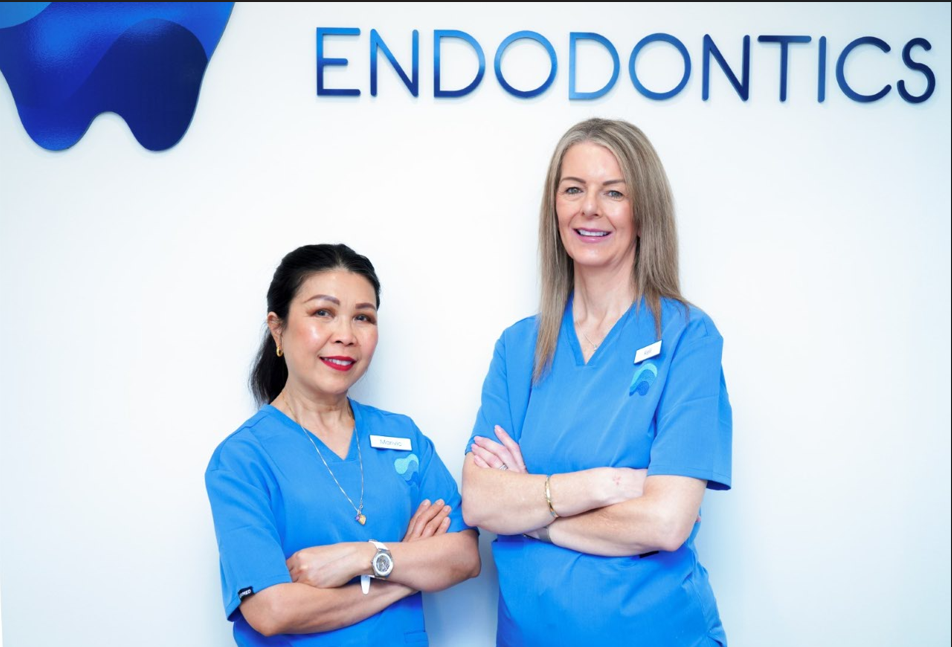
Wollongong Endodontics is the only specialist endodontic clinic in Wollongong and the Illawarra region. You do not need to travel to Sydney for specialist endodontic care. Our team — Dr Deepak Chellappa and Dr Sara Namjou — are both AHPRA registered specialist endodontists with postgraduate training in endodontics.
This page covers what to expect before, during and after your appointment: what to bring, what happens at the consultation, how treatment is performed, post-operative care, sedation options, parking and fees.
Before your appointment
A few things that help your visit go smoothly:
- Referral and radiographs — if your general dentist has given you a referral letter and copies of your X-rays or CBCT scans, please bring them. If not, we can retake imaging in-house.
- Medical history — bring a list of current medications, known allergies, and any medical conditions we should be aware of (including pregnancy and recent surgery).
- Medicare and health fund cards — for HICAPS on-the-spot rebate claims.
- Eat beforehand — many patients prefer to have eaten before coming, as the anaesthetic will leave the tooth numb for 2–3 hours afterwards.
- Arrive a few minutes early — the Wollongong practice is at G04/38 Atchison Street, ground floor.
What happens at your first appointment
Your first appointment is a comprehensive consultation — 45 to 60 minutes — during which we assess the tooth and plan treatment. A typical consultation includes:
- Detailed history — symptom onset, character, triggers and duration; medical and dental history review.
- Clinical examination — visual inspection, percussion and palpation tests, pulp vitality testing, biting tests where indicated.
- Digital radiography — high-resolution periapical and/or bitewing X-rays.
- CBCT 3D imaging — where indicated for complex anatomy, calcification, resorption or surgical planning.
- Diagnosis and discussion — we explain exactly what we found, the diagnosis, the recommended treatment and the prognosis.
- Written quote — an itemised quote is provided before any treatment is commenced.
You leave the consultation knowing exactly what treatment is recommended, what it will cost, how many visits are likely required, and what the long-term outlook is for the tooth.
What happens during treatment
Most endodontic treatment is carried out under local anaesthesia, with the tooth completely numb before any instrumentation begins. A thin rubber sheet (rubber dam) is placed around the tooth — this keeps the tooth isolated from saliva and oral bacteria.
The treatment itself is carried out under the operating microscope, which provides up to 25× magnification — essential for locating all canals, negotiating calcified anatomy and treating complex cases. The canal system is cleaned, shaped, disinfected (Fotona SkyPulse SWEEPS laser-assisted irrigation is used on appropriate cases), and sealed with bioceramic materials that bond to dentine and provide a durable long-term seal.
Most single-visit root canals take 60–90 minutes; complex cases or molars may take longer or be completed in two visits. Breaks are offered throughout.
Sedation options
Specialist endodontic treatment is very well tolerated under local anaesthesia alone, but for patients with dental anxiety we offer:
- Oral sedation — a tablet taken an hour before the appointment. Produces a deeper level of relaxation. A companion is required to drive you home.
- IV sedation — deeper sedation administered by a visiting sedationist. Arranged by appointment for highly anxious patients or complex cases.
See our IV & Oral Sedation page for full details and pre-operative instructions.
Post-operative care
Mild tenderness around the treated tooth for 2–3 days is common and completely normal. Simple steps to manage this:
- Take ibuprofen and paracetamol in combined doses as directed (check for contraindications).
- Eat on the other side of the mouth until the definitive restoration (usually a crown) is placed.
- Avoid hard or crunchy foods on the treated tooth while it has a temporary seal.
- Brush and floss normally — the treated tooth can be cleaned gently from day one.
- Contact us if you have significant pain, swelling, or the temporary filling feels loose.
Written post-operative instructions are provided at your appointment. Clinical review is arranged at 6–12 months (no additional fee) to confirm healing.
Fees and payment
We operate a transparent, fixed-fee system. Every patient receives a written, itemised quote before treatment is commenced. A summary of our fees:
- Consultation and radiographs: $300
- Root canal treatment — anteriors and premolars: $2,100 – $2,700
- Root canal treatment — molars: $2,400 – $3,000
- Apical surgery: $1,500 – $2,500
Fees include imaging, local anaesthesia, rubber dam isolation, microscope time, irrigation, obturation materials, and post-operative review. Additional costs may apply for post removal, core restorations, or complex cases — any additional costs are disclosed in advance. HICAPS is available on-site for same-day health fund rebate claims.
Payment plans are available through a third-party provider. Please speak with our reception team at your consultation to discuss this option. See our full fee schedule for details.
Finding us
Wollongong Endodontics is located at G04/38 Atchison Street, Wollongong NSW 2500 — ground floor of the building. Street parking is available on Atchison Street and surrounding streets. Paid parking is available nearby. The practice is accessible by public transport — Wollongong train station is approximately 10 minutes walk from our practice, and multiple bus routes service the Atchison Street area.
Opening hours: Monday–Friday 9am–5pm.
Frequently Asked Questions
A referral is not strictly required in Australia, but we encourage one. A referral from your general dentist provides us with clinical context, radiographs and treatment history — this ensures your consultation is focused and time-efficient. Patients without a referral are welcome; we can liaise with your general dentist after the initial appointment.
Your first appointment is a comprehensive consultation. It includes a detailed history, clinical examination, pulp vitality testing, digital radiographs and (where indicated) CBCT 3D imaging. We discuss the findings with you, explain the treatment options, provide a written quote and answer your questions before any treatment is commenced. Most consultations take 45–60 minutes.
Modern endodontic treatment is carried out under effective local anaesthesia — the tooth and surrounding area are completely numb during the procedure. For patients with dental anxiety, oral or IV sedation is available by arrangement. Most patients report that root canal treatment feels similar to having a filling.
A single-visit root canal on a straightforward tooth typically takes 60–90 minutes. Molars and more complex cases may take longer and are often completed in two visits spaced a week or two apart. We confirm the number and duration of visits at your consultation so you know what to expect.
Avoid eating until the anaesthetic has fully worn off (typically 2–3 hours). You may feel mild tenderness around the tooth for a few days — ibuprofen and paracetamol taken as directed usually manage this well. Avoid chewing hard foods on the treated tooth until the definitive restoration (usually a crown) has been placed by your general dentist. Written post-operative instructions are provided at your appointment.
Specialist endodontic treatment involves operating microscope magnification, CBCT imaging where indicated, specialist rotary and reciprocating instruments, bioceramic sealing materials, and time — often 60–90 minutes per visit with complex anatomy requiring longer. The fee reflects the specialist training, the clinical time, the advanced technology used on every case, and the consistent quality of the outcome. Every patient receives a written, itemised quote before treatment commences.
Most private health insurance extras policies provide a rebate for specialist endodontic treatment. The amount varies by fund, policy level and annual limits. HICAPS is available on-site for same-day rebate claims — you pay only the gap. We can provide the item codes before your appointment so you can check your entitlements with your fund.
Payment plans are available through a third-party provider. Please speak with our reception team at your consultation to discuss this option.